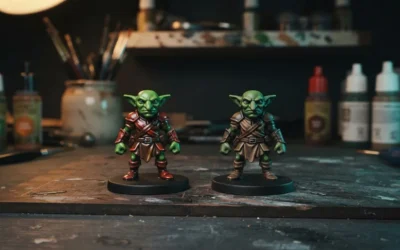
Contrast Paints vs Traditional Layering: Which Should You Use?
One-coat speed paints or classic layering? A side-by-side comparison, where each technique shines, how to use speed paints well, and the hybrid method most painters use.

One Page Rules (OPR) is a family of free, streamlined tabletop wargames that you can play with any miniatures you like. Units use just two key numbers, Quality (how well they fight and shoot) and Defense (how well they’re protected), players take turns activating one unit at a time, and a typical game finishes in about one to two hours. The core rules are free to download, armies are built with the free Army Forge web app, and the official miniatures are optional. That’s why OPR has become a favourite for new players, 3D printers and veterans who want big battles without the big rulebooks or big costs.
OPR started as a set of very short, free rules for sci-fi and fantasy battles, originally squeezed onto a single page, hence the name. It has grown into several games, all sharing the same core system, supported by a community-funded business model: the essential rules are free, and supporters get extra content, campaign books and official model files.
The two big settings are:
| Game | Setting | Scale |
|---|---|---|
| Grimdark Future | Sci-fi armies | Large battles, units of models |
| Grimdark Future: Firefight | Sci-fi | Skirmish, small squads |
| Age of Fantasy | Fantasy armies | Large battles |
| Age of Fantasy: Skirmish | Fantasy | Skirmish, small warbands |
| Age of Fantasy: Regiments | Fantasy | Rank-and-flank blocks of troops |
If you know the big-brand sci-fi and fantasy wargames, you’ll recognise the feel: space marines and alien swarms in Grimdark Future, elves, dwarves, orcs and undead in Age of Fantasy, each with OPR’s own names and background.
Every unit has:
Weapons can add AP (armour piercing), which makes Defense rolls harder, and special rules like Blast, Deadly or Rending that add flavour without pages of exceptions.
Instead of one player moving their whole army and then the other, players take turns activating one unit each. You might move and shoot with one squad, then your opponent responds with one of theirs. This keeps both players involved, cuts downtime and makes every decision count.
Each activation, a unit can:
| Action | Move | Then |
|---|---|---|
| Hold | None | Shoot |
| Advance | 6″ | Shoot |
| Rush | 12″ | No shooting |
| Charge | 12″ into combat | Fight in melee |
Units that lose half their models, or lose a melee, take a Quality test. Fail, and they become Shaken (losing their next action to recover), or rout if things are dire.
Most standard games use objective markers: hold more of them than your opponent at the end of round 4 to win.
That’s most of the core game. Everything else comes from units’ special rules, which are short and printed on the army list itself.
OPR isn’t for everyone:
Because OPR is model agnostic, you have options:
Tip: OPR is a fantastic excuse to paint a whole army quickly. The drybrushing three-step method gets dozens of models table-ready in an evening.
Is One Page Rules free? The core rules and Army Forge are free. Extra books and official model files support the designers.
Can I use any miniatures for OPR? Yes. That’s one of its main appeals.
How long does a game of OPR take? Usually 1 to 2 hours for a standard game.
What’s the difference between Grimdark Future and Firefight? Grimdark Future is for full armies with units; Firefight is a skirmish version with small squads and individual models.

One-coat speed paints or classic layering? A side-by-side comparison, where each technique shines, how to use speed paints well, and the hybrid method most painters use.
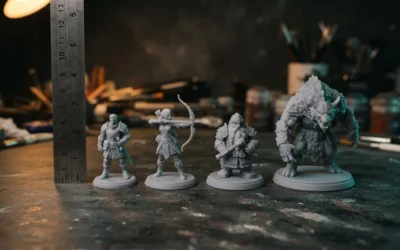
A clear guide to miniature scales: what 28mm and 32mm really mean, heroic proportions, which scale to choose for D&D, wargames and display, and scaling STL files.
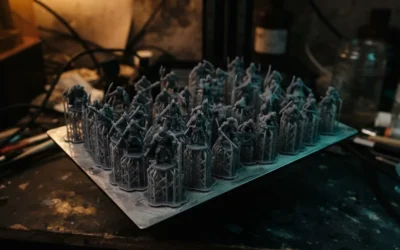
How to support 28–32 mm miniatures for resin printing: the right angle, light vs heavy supports, island checks and settings for Lychee and Chitubox.

How to thin acrylic miniature paints: the right ratios for base coats, layers and glazes, what to thin with, and how to tell when it’s too thick or too thin.

Prime miniatures the right way: spray, brush-on and airbrush methods, which primer colour to pick, zenithal priming, and fixes for fuzzy or beading primer.

Everything you need to print tabletop miniatures at home: choosing a resin printer, slicing and supports, washing, curing, safety and fixing failed prints.
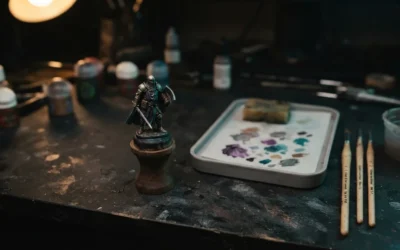
A step-by-step beginner’s guide to painting D&D miniatures: the starter kit, then prime, base coat, wash, highlight, base and seal.
Buying for someone who rolls dice, paints tiny heroes or plans elaborate dungeon crawls can feel like stepping into a wizard’s workshop blindfolded. Do they...
Walk into any games night and you'll find two tribes of miniatures sharing the table: grey plastic warriors clipped from sprues, and crisp resin models fresh...

Artisan Guild is one of the best-known fantasy STL studios. We look at the style, modularity, how the files print, and whether to subscribe or buy prints.